Lead-Free vs Leaded Reflow Soldering: Which Process Fits Your PCB Better?

If you are comparing lead-free and leaded reflow soldering, the biggest mistake is treating the choice like a simple material preference. It is not just about one paste melting at a lower temperature and another one melting at a higher temperature. The real decision changes your compliance position, your profile window, your oxidation risk, your defect pattern, and sometimes the kind of reflow oven your line needs. If you want the broad process picture first, this complete lead-free reflow guide is the right cluster anchor to start from.
Many factories still talk about lead-free and leaded reflow as if one is old and easy and the other is new and difficult. That summary is too shallow to be useful. Leaded reflow can still make sense in some products. Lead-free reflow can be the better long-term process even when it costs more to control. The better answer depends on where the board will be sold, how sensitive the components are, what reliability target the customer expects, and how much process margin your line really has.
This article compares the two processes in practical factory language. It explains what really changes in temperature profiling, wetting behavior, defect risk, material handling, equipment choice, and production economics. The goal is not to prove that one process is always superior. The goal is to help you decide which one fits your PCB, your customer, and your production direction better.
What really changes when you switch from leaded to lead-free
The alloy is different, but that is only the start
The first obvious difference is the alloy system. Traditional leaded reflow often uses tin-lead formulations such as Sn63/Pb37, while lead-free production commonly uses SAC-family systems. That sounds like a simple chemistry change, but in practice it pushes several process changes at once. The melting behavior shifts. The profile target shifts. The wetting behavior shifts. The process margin you used to trust may no longer be the same.
That is why you should not explain the change only in alloy language. You are not just changing paste. You are changing how heat, time, oxidation, and workmanship interact on your line.
Your thermal window usually gets tighter
The second major difference is the thermal window. Leaded reflow is often more forgiving because the liquidus point is lower and the profile can reach a good joint without pushing the board as hard. Lead-free reflow usually needs more energy and leaves less free space between not enough heat and too much thermal stress.
That tighter window matters most when your product carries mixed thermal mass. A board with large copper areas, connectors, shields, and heat-sensitive small packages can force you to solve opposite problems at the same time. One area still needs more heat while another area is already close to its safe limit. This is where many factories first notice that lead-free process control is not just a material change. It is a discipline change.
Your daily line decisions become less forgiving
With leaded reflow, some factories can survive small handling mistakes longer before visible defects appear. With lead-free reflow, weak paste handling, profile drift, or borderline oxidation can show up faster. That does not mean lead-free is unstable by nature. It means the process exposes weakness more clearly.
So when you compare the two processes, you should ask a deeper question: does your current line run well because it is well controlled, or because the old process was still forgiving enough to hide weak habits? That question matters more than many equipment brochures admit.
Why some factories still use leaded reflow
Legacy products and special cases still exist
Leaded reflow has not disappeared from every factory. Some products still use it because they serve legacy markets, defense-related exceptions, repair environments, or older product families that were designed around that process long ago. In those cases, the production line may not be wrong to keep leaded reflow. It may simply be matching the product and supply chain reality it already has.
If your factory supports repair, refurbishment, or low-volume continuation products, changing those jobs to lead-free just because it sounds modern can create unnecessary validation work, new thermal risk, and avoidable purchasing cost.
Lower peak temperature can reduce stress
One reason leaded reflow can still look attractive is that the profile target is often easier on the board and components. Lower peak temperature can reduce thermal stress on sensitive packages, laminates, coatings, and older assemblies. That matters when the product was never designed for a hotter lead-free window.
This is why some engineers still describe leaded reflow as gentler. That description is not always wrong, but it becomes dangerous if it turns into an excuse to avoid future-ready process planning.
Simpler production does not always mean better long-term fit
A leaded line may feel easier to run today, especially if your factory already knows the profile, your materials are stable, and your customer does not require lead-free compliance. But that short-term simplicity does not always translate into the better business choice. If new customers, export markets, or product redesigns are likely to push you toward lead-free anyway, staying comfortable with leaded reflow for too long can delay the transition until it becomes urgent.
So leaded reflow can still be practical, but you should treat it as a fit question, not as the automatic easy answer.
Why lead-free became the default in global SMT manufacturing
Compliance pressure changed buyer expectations
The strongest reason lead-free became the default is not fashion. It is compliance and customer expectation. The European Commission’s RoHS Directive overview explains why hazardous-substance restrictions became central to electrical and electronic equipment. Once those requirements became normal in major markets, many buyers stopped seeing lead-free as an option and started seeing it as a baseline capability.
For you, this means the process decision is often made upstream by the market. If your boards go into export products, multinational supply chains, or customer programs that already assume RoHS-style compliance, lead-free is not just a technical choice. It is part of whether you can win the order at all.
SAC systems changed the normal thermal target
Once SAC-family lead-free systems became common, many factories had to rebuild their idea of a normal reflow profile. Higher peak targets, tighter control around time above liquidus, and more attention to oxidation became part of everyday process work. In other words, lead-free did not only replace one paste. It changed the normal thermal expectation of the SMT line.
Lead-free became a capability signal, not just a material choice
In many buyer conversations, lead-free capability now acts as a signal of process maturity. Customers often assume that a factory that can run stable lead-free reflow also has stronger profile discipline, better material control, and better line verification habits. That assumption is not always perfectly true, but it does shape commercial perception.
So even when a product could still run leaded reflow, the factory may still invest in lead-free capability because the market now treats that capability as a sign of modern manufacturing readiness.
How the reflow profile changes between the two processes
Peak temperature and time above liquidus
The most direct profile difference is peak temperature and time above liquidus. Leaded processes usually reach full wetting with a lower peak target. Lead-free processes often need a higher peak and closer control of the time spent above liquidus. If the peak is too low, you can see weak spread or incomplete wetting. If the board stays too hot for too long, you may create laminate stress, component damage, or cosmetic problems.
That is why profile development becomes more sensitive when you move from leaded to lead-free. You are often working inside a narrower band where underheating and overheating both become expensive in different ways.
Ramp, soak, and cooling behavior
The difference is not only in peak. Ramp rate, soak behavior, and cooling also matter. Lead-free profiles often need more careful shaping so the board reaches a stable condition before the final reflow stage. Cooling behavior matters because it affects joint formation and consistency. A profile that works once is not enough if it becomes unstable during long production runs.
If you want the profile-verification side explained more deeply, this guide to IPC-7530 for reflow soldering is useful when your team needs a more structured way to judge whether the thermal window is truly repeatable.
Mixed thermal mass makes the gap more obvious
The difference between leaded and lead-free grows larger when the product is thermally uneven. Dense boards, large copper planes, heavy connectors, heat sinks, and mixed package sizes stretch the process harder. Leaded reflow may still survive with modest compromise on some boards. Lead-free often forces you to measure, validate, and tune more carefully because the margin is lower.
This is one reason some factories think lead-free creates problems. In reality, it often reveals problems the older process did not force them to see yet.
How wetting, oxidation, and defects differ
Lead-free is usually more oxidation-sensitive
Lead-free reflow is often more sensitive to oxidation than leaded reflow. That means board cleanliness, component surface condition, flux strength, wait time, and oven atmosphere can all matter more. A line that looked stable on paper can start to show weak wetting once those factors drift only slightly.
This is why nitrogen support becomes more attractive in some lead-free environments. It does not replace process discipline, but it can improve the atmosphere around the joint when oxidation is eating up too much of your margin.
Joint appearance can mislead your team
One common mistake is visual judgment. Lead-free joints often look duller or less shiny than leaded joints. That does not automatically mean the joint is defective. At the same time, your team should not use lead-free looks dull as an excuse to ignore real non-wetting, poor spread, or weak solder shape.
This difference in appearance matters because inexperienced operators sometimes reject acceptable lead-free joints or accept poor ones for the wrong reason. Process training should correct that early.
The defect pattern is not always the same
The two processes can also differ in the types of defects that show up most easily. Lead-free lines may expose more oxidation-related wetting issues, marginal spread, or tighter profile-related defects. Leaded lines may still suffer from bridging, solder balls, or thermal imbalance, but the exact trigger conditions can be different because the metallurgy and thermal demand are different.
So when you compare lead-free and leaded reflow, do not ask only which one has more defects. Ask which kinds of defects are more likely on your boards and how expensive they are to correct.
What changes before the board even enters the oven
Paste storage and handling discipline
The difference between the two processes often begins before heating starts. Paste storage, thawing, print timing, and handling discipline influence both leaded and lead-free reflow, but lead-free tends to punish weak habits faster. If paste condition is drifting, lead-free output often becomes unstable earlier than leaded output does.
That is why process comparison should not start at the oven only. It should start at paste control and stencil-print discipline too.
Surface finish and cleanliness effects
Board finish condition and cleanliness play a direct role in how well solder wets the pad. If surfaces are oxidized, contaminated, or inconsistently stored, lead-free reflow can show trouble sooner because the process margin is already tighter. A finish that still seems usable on a forgiving line may start failing once the hotter lead-free process asks more from the joint.
Wait time and upstream variation
Wait time between printing and reflow, placement consistency, and upstream SMT variation can also matter more than many teams think. If you keep comparing peak temperatures while ignoring board hold time or print variation, you may blame the wrong part of the process. Lead-free reflow especially rewards factories that treat the whole line as one connected system rather than one oven surrounded by unrelated steps.
What kind of oven setup each process usually needs
Standard air reflow for simpler boards
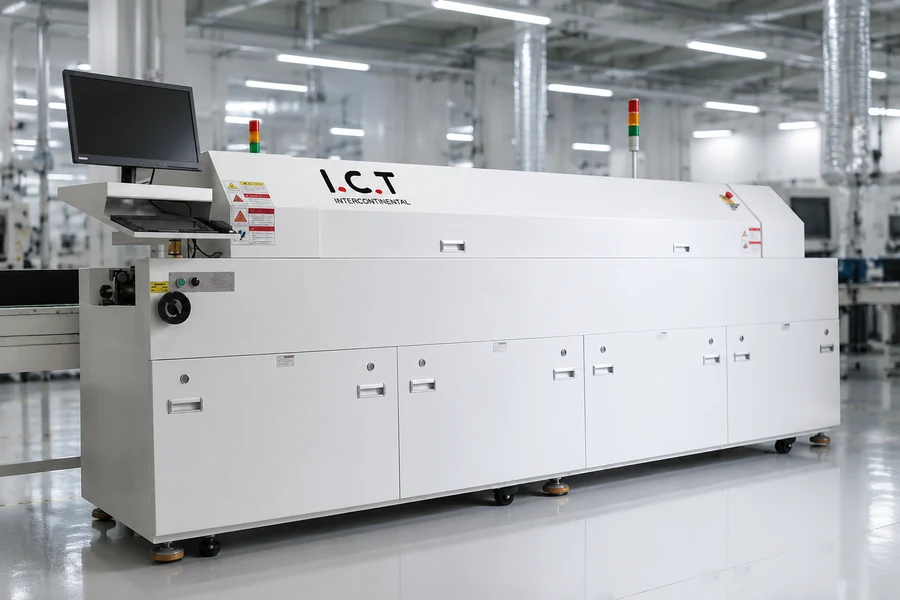
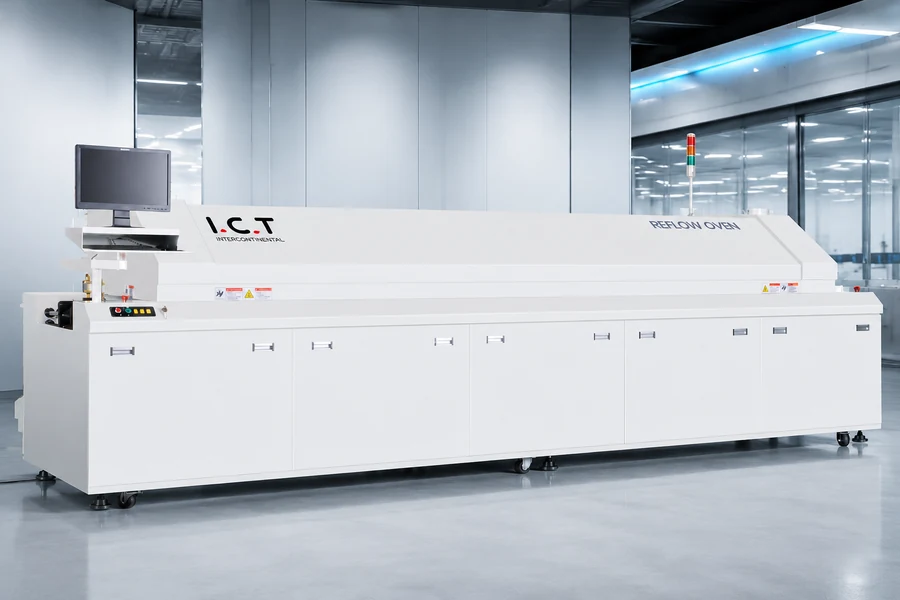
If your products are relatively simple, your thermal mass is moderate, and your compliance pressure still allows leaded or forgiving air-process work, you may not need the most advanced oven platform. A stable entry machine such as an S6 6-zone reflow oven can be a practical fit when the process window is not unusually narrow and daily production depends more on repeatable basics than on advanced atmosphere control.
That does not mean simpler equipment is only for leaded work. It means some processes do not need to pay for complexity they are not really using.
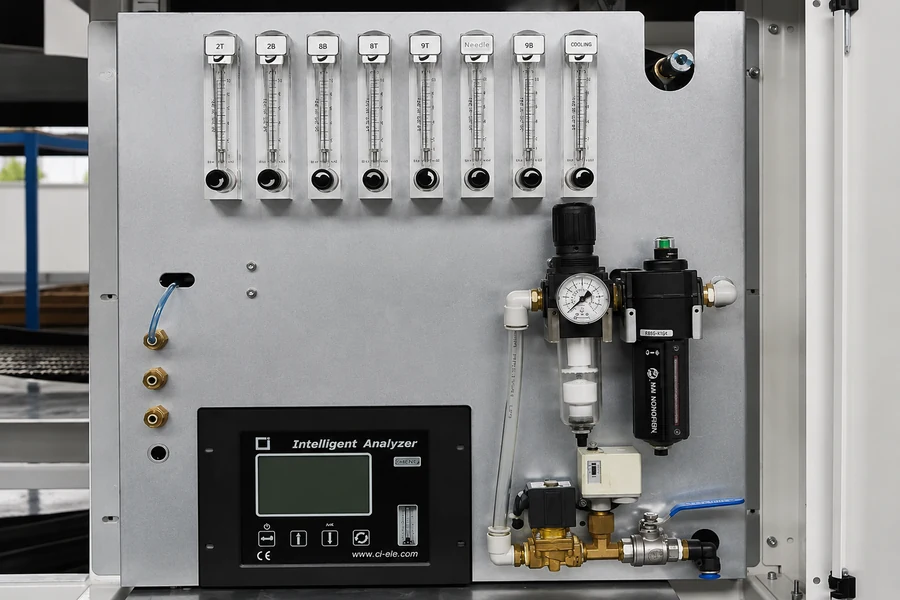
Nitrogen support for tighter lead-free margin
Once lead-free oxidation sensitivity, cosmetic expectations, or fine-pitch density begin to pressure the process, nitrogen support becomes more valuable. A Lyra622 nitrogen reflow oven fits the kind of line that wants stronger lead-free stability without treating the atmosphere question like an afterthought. Nitrogen is not a miracle fix, but it can widen the usable margin when oxidation is part of the real problem.
This is why some lead-free lines become much easier to stabilize after the atmosphere question is handled correctly.
More zones and stronger control for dense assemblies
If your boards are dense, thermally uneven, or aimed at higher reliability, more shaping room becomes important. A longer, more controllable platform such as a 12-zone reflow oven can make lead-free profiling easier because you have more room to build a stable heat history instead of forcing abrupt transitions in a short heating distance.
If you want a broader map of available platforms before matching one to your process, this overview of reflow soldering ovens for PCB assembly lines is the simplest way to compare the main equipment directions.
How cost, yield, and reliability trade off
Material and energy cost
Leaded reflow can look cheaper on the surface because the profile is often easier, the peak temperature is lower, and the process may require less atmosphere support. Lead-free can raise material and utility cost, especially when tighter control or nitrogen becomes necessary.
But you should be careful with surface-level cost comparisons. A process is not cheaper just because the paste or energy number is lower.
Rework and hidden process cost
The hidden cost lives in yield loss, rework, line arguments, and customer risk. If your factory keeps forcing an unsuitable process onto a product, the visible cost of consumables may stay low while the hidden cost of instability keeps climbing. A process that looks cheap but creates repeated troubleshooting is not actually cheap.
This is one reason you should compare lead-free and leaded reflow with total process behavior in mind, not only direct spend.
The wrong process can be expensive even if it looks cheaper
If your customers expect lead-free capability and you keep relying on leaded comfort, the commercial cost may be larger than the process cost. If your board was designed around lower thermal stress and you force a careless lead-free conversion, the technical cost may be larger than the compliance benefit. The true comparison always depends on fit.
So the cost question is not which process costs less in theory. The better question is which process creates the lower total risk for this specific product family.
Need help choosing between lead-free and leaded reflow for a real PCB program?
Tell our engineers about your board type, customer market, thermal limits, and current process risk. We can help compare profile strategy, equipment fit, and the most practical direction for your SMT line.
How you decide which process fits your PCB better
Start with compliance and market direction
The first decision point is not temperature. It is market direction. Where will the board be sold? What do the customer documents require? Is the product staying local and legacy, or is it moving into export, OEM supply chains, or broader compliance-controlled business? If the answer points clearly toward lead-free, your process decision is already heavily shaped before the first thermal profile is measured.
Check product class and board sensitivity
The second decision point is product consequence. What happens if reliability falls? How heat-sensitive is the board? How mixed is the thermal mass? How stable is your upstream SMT process? If you need a disciplined way to connect those questions to a daily production method, this article on building an IPC-compliant reflow process is the best next step when you are moving from broad comparison into actual line control.
Build a transition plan if you are moving to lead-free
If you are moving from leaded to lead-free, do not convert the line with a paste-swap mindset. Recheck paste handling rules, redefine profile approval logic, select representative boards, review oxidation risk, and decide whether your current oven capability is still enough. The factories that transition well are the ones that treat the move like a process project, not just a purchasing change.
That is also why the lead-free versus leaded decision should be made early and clearly. The longer you wait, the more likely the transition turns reactive instead of controlled.
Final takeaway
Leaded can still fit the right legacy job
Leaded reflow is not automatically obsolete. It can still fit legacy products, lower-temperature-sensitive assemblies, and controlled cases where market rules permit it. If that is your reality, there is no need to pretend otherwise.
Lead-free is usually the stronger long-term manufacturing direction
At the same time, lead-free reflow is usually the stronger long-term direction for global SMT manufacturing. It matches modern compliance expectations, buyer perception, and future product planning. The tradeoff is that it asks more from your profile discipline, atmosphere control, and line consistency.
The practical answer is simple: choose the process that matches your customer, your board, and your factory’s future, not just the one that feels easier today. When you make the choice that way, the comparison becomes clearer and the line becomes easier to manage.
Frequently Asked Questions
Is lead-free reflow always better than leaded reflow?
No. Lead-free reflow is often the better long-term choice for global manufacturing, but it is not automatically the better process for every board. It usually wins when compliance, export markets, and future-ready capability matter. Leaded reflow can still fit legacy products or lower-temperature-sensitive assemblies when the customer and market allow it. The better process depends on product rules, thermal sensitivity, and how much control your line can hold.
Why is lead-free reflow harder to control?
Lead-free reflow is often harder to control because the process window is usually tighter. Peak temperature is higher, oxidation sensitivity is greater, and the margin between weak wetting and thermal stress is often smaller. That means paste handling, profile tuning, cleanliness, and equipment stability all matter more. The process is not impossible. It is simply less forgiving of weak habits.
Can the same reflow oven run both leaded and lead-free profiles?
Yes, one reflow oven can often run both processes if the machine has enough control range and the factory manages recipes correctly. The real issue is not whether the oven can heat both profiles. The real issue is whether the line can switch materials, recipes, validation rules, and process control without confusion. Mixed use is possible, but it needs discipline and clear release logic.
Does lead-free reflow always need nitrogen?
No. Many lead-free assemblies run successfully in air. Nitrogen becomes more useful when oxidation risk is high, wetting margin is weak, fine-pitch density is higher, or cosmetic and reliability expectations are stricter. You should treat nitrogen as a process tool that can improve the environment around the joint, not as a required feature for every lead-free product.
What is the safest way to move from leaded to lead-free production?
The safest way is to treat the change like a process transition, not a paste replacement. Start with customer requirements, then recheck paste handling, board and component limits, profile approval rules, representative test boards, and oven capability. Validate the new process on real assemblies and define when revalidation is required. A structured transition usually prevents far more trouble than trying to convert the line in one fast step.
Talk to Our Engineers
Tell us about your target market, solder system, board type, and process concerns. Our engineers can help compare lead-free and leaded routes and match the right reflow platform to your production line.